Everything you need to know about PVC and Vinyl Fencing
All about pvc and vinyl fencing
PVC and vinyl fencing have become popular choices for homeowners, ranch properties, and equine facilities because they offer a clean appearance, low maintenance, and long-term durability. They can work especially well in Arizona, where property owners often want a fence that looks finished without requiring constant painting, staining, or repairs.
Although the terms PVC fencing and vinyl fencing are often used interchangeably, they generally refer to the same type of product. Most vinyl fencing is made primarily from polyvinyl chloride, or PVC, which is a durable plastic material designed to withstand outdoor exposure.
If you are considering PVC or vinyl fencing for your property, here are some of the most important things to know.
PVC and Vinyl Fencing Requires Very Little Maintenance
One of the biggest advantages of PVC fencing is how little maintenance it requires compared with materials like wood.
Wood fencing may need to be painted, stained, sealed, or repaired as it ages. Vinyl fencing does not need to be painted, and it will not rot, splinter, or attract insects in the same way wood can.
In most cases, maintenance is limited to occasional cleaning. Dirt, dust, and debris can usually be removed with water, mild soap, or a pressure washer used carefully.
For property owners who want a clean fence without adding another maintenance project to their list, vinyl can be a very attractive option.
It Holds Up Well to Arizona Weather
Arizona can be tough on outdoor building materials. Strong sunlight, temperature changes, dry conditions, wind, and seasonal storms can all affect fencing over time.
Quality PVC fencing is manufactured to resist UV exposure and weathering. Unlike steel, it will not rust, and unlike wood, it will not dry out, split, or rot.
That does not mean vinyl fencing is indestructible. Lower-quality materials can become brittle over time, and a strong impact can crack or break a rail or panel. Choosing a quality product and having it installed correctly makes a significant difference in how well the fence performs over the long term.
PVC Fencing Works Well for Equine Properties
PVC rail fencing is particularly popular on horse properties because of its appearance and visibility.
One of the most important characteristics of a horse fence is that horses need to be able to see it clearly. Thin wire fencing can be difficult for a horse to recognize, especially when the animal is running, playing, or moving quickly through a pasture.
PVC fencing typically uses wide horizontal rails that are highly visible. This helps horses recognize the fence line and reduces the chance of an animal accidentally running into it.
That visibility is one of the biggest advantages of using PVC fencing on an equine property.
PVC fencing also creates the classic, clean equestrian look many horse owners want around paddocks, arenas, pastures, driveways, and entrances.
Depending on the property, vinyl rail fencing can also be combined with appropriate no-climb mesh when additional containment is needed for smaller animals.
PVC Fencing Comes in Several Styles
Vinyl fencing is available in much more than the traditional white horse-fence design.
Depending on the application, PVC fencing can include:
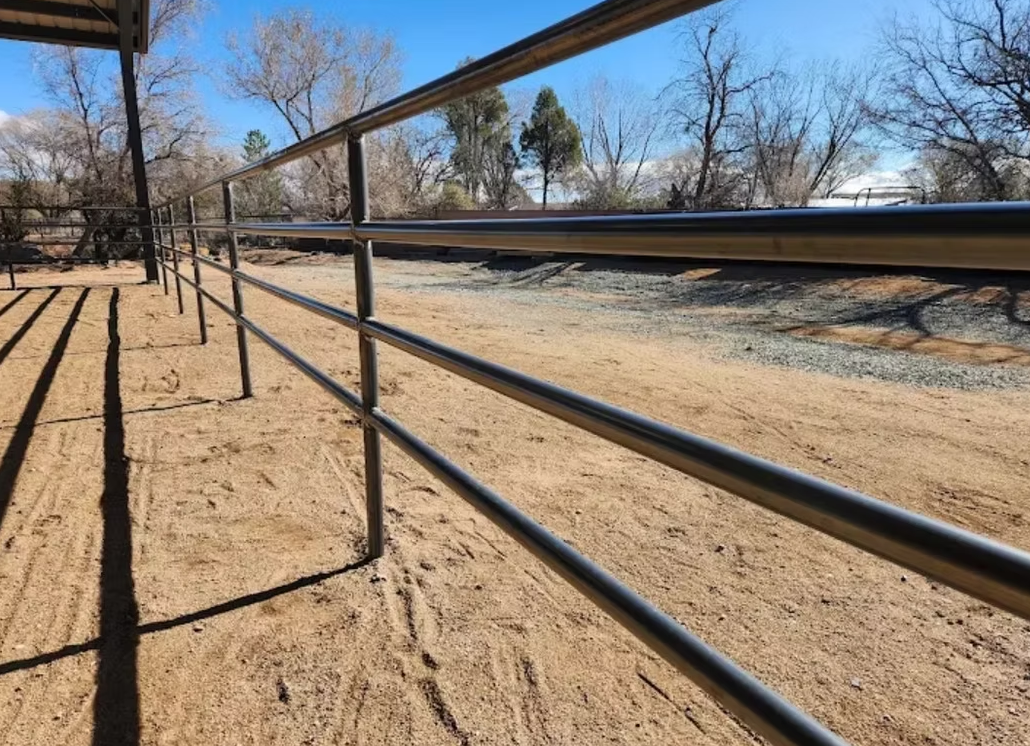
- Two-, three-, and four-rail ranch fencing
- Full privacy fencing
- Semi-privacy fencing
- Picket fencing
- Decorative residential fencing
- Gates and entry systems
This makes it suitable for everything from residential backyards to large rural properties.
Color options are also available, although white remains one of the most common choices, especially for equestrian applications.
Vinyl Fencing Does Not Rot or Rust
Another important benefit is that PVC is not affected by many of the problems that shorten the life of traditional fencing materials.
Wood posts and rails can eventually rot, particularly around the ground line where moisture collects. Metal fencing can develop rust if protective coatings fail or the surface is damaged.
PVC avoids both of these issues.
That can make it a good option for property owners who plan to keep the fence for many years and want predictable maintenance requirements.
There Are Some Downsides to Consider
PVC fencing is not the right solution for every property.
One of the biggest considerations is impact resistance. While quality vinyl fencing is strong, it does not have the same structural strength as a properly constructed steel pipe fence.
A vehicle, falling tree limb, large animal, or other heavy impact can crack or break vinyl components.
PVC fencing can also have a higher initial cost than some basic fencing options. However, the reduced need for painting, staining, rust treatment, and other maintenance may help offset that cost over time.
Installation quality is also extremely important. Posts need to be properly spaced, set, and aligned so the fencing remains straight and stable.
Is PVC or Vinyl Fencing Right for Your Property?
PVC fencing can be an excellent choice if you want a clean appearance, low maintenance, weather resistance, and a wide variety of styles.
It is especially attractive for horse properties because the wide rails are easy for horses to see while providing the traditional equestrian appearance many property owners prefer.
The best fencing system ultimately depends on your property, terrain, animals, budget, and how the fence will be used.
HT Fencing installs PVC and vinyl fencing throughout Prescott and the surrounding Northern Arizona communities. Whether you need residential fencing, ranch fencing, horse fencing, gates, or a complete property enclosure, we can help you choose a fencing system that fits your property and long-term needs.